

Redefining the Era of Digital Surgery: The Role of Artificial Intelligence, Augmented Reality and Machine Learning in the Surgical Field
Abstract
The era of digital surgery is characterized by the implementation of new technologies that have the potential to improve preoperative planning, increase the availability of therapeutic alternatives, improve surgical training in apprentices, optimize postoperative results for patients, and reduce possible adverse events (1). Although the incorporation of these technologies has the main premise of improving patients' clinical outcomes, the use of these advances has been accelerated by commercial interests and the opportunities that large companies have to generate profits worldwide (2).
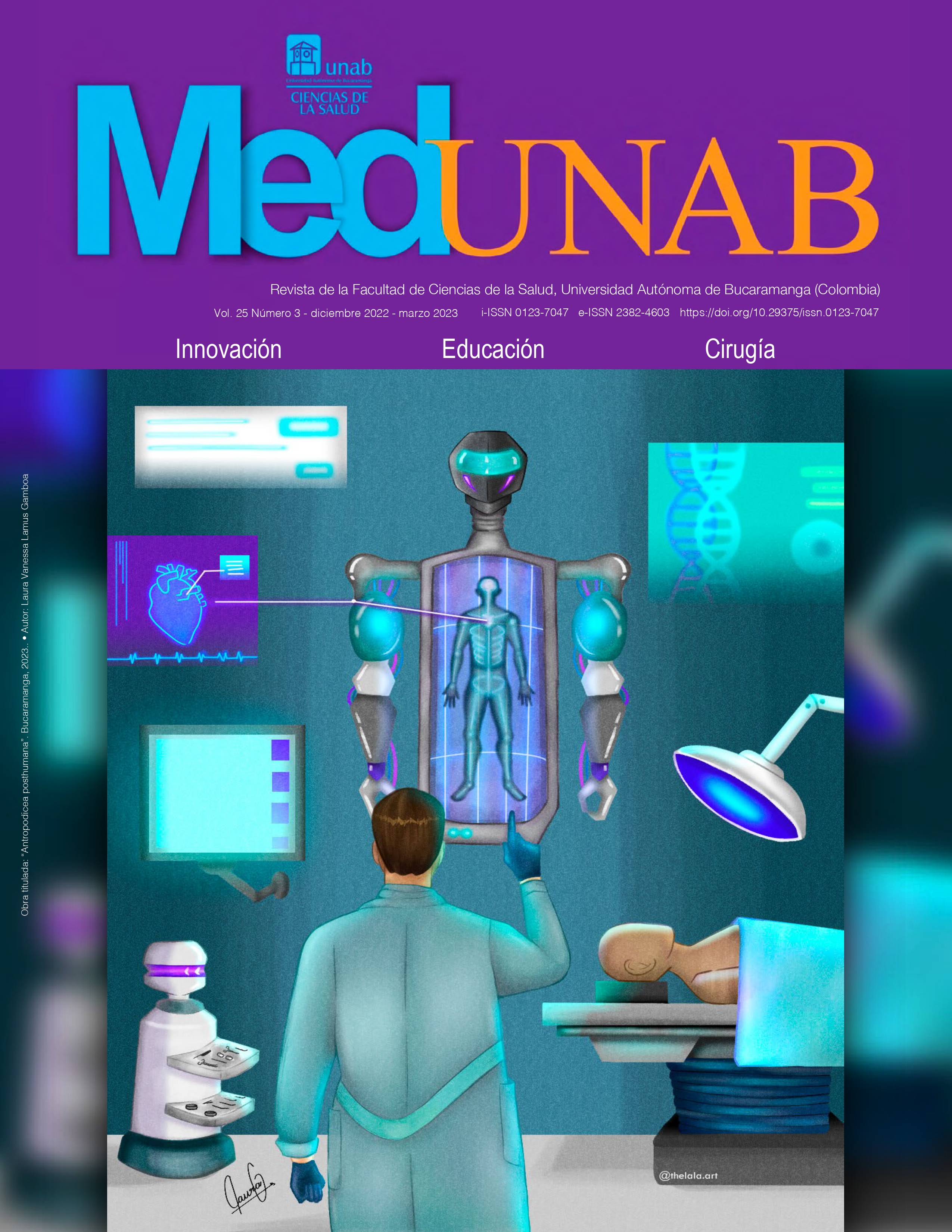
The technologies that are currently having a direct impact on the surgical field are artificial intelligence (AI), augmented reality (AR), and machine learning (ML), without forgetting the availability of other robotic devices (3). Although digital surgery is gaining more popularity in the clinical practice, there is still a lack of knowledge about it, its benefits, and potential barriers to its adoption.
References
Raza MM, Venkatesh KP, Diao JA, Kvedar JC. Defining digital surgery for the future. NPJ Digit Med [Internet]. 2022;5:155. doi: https://doi.org/10.1038/s41746-022-00706-6
Olsen GH, Jopling JK. Artificial intelligence in surgery: The American College of Surgeons and the Future of the Profession. J Am Coll Surg [Internet]. 2022;235(1):146-7. doi: https://doi.org/10.1097/XCS.0000000000000189
Morris MX, Rajesh A, Asaad M, Hassan A, Saadoun R, Butler CE. Deep Learning Applications in Surgery: Current Uses and Future Directions. Am Surg [Internet]. 2023;89(1):36-42. doi: https://doi.org/10.1177/00031348221101490
Valente M, Bellini V, Del Rio P, Freyrie A, Bignami E. Artificial intelligence is the future of surgical departments … Are we ready? Angiology [Internet]. 2023;74(4):397-8. doi: https://doi.org/10.1177/00033197221121192
Youssef SC, Haram K, Noël J, Patel V, Porter J, Dasgupta P, et al. Evolution of the digital operating room: The place of video technology in surgery. Langenbecks Arch Surg [Internet]. 2023;408(1):95. doi: https://doi.org/10.1007/s00423-023-02830-7
Lam K, Abràmoff MD, Balibrea JM, Bishop SM, Brady RR, Callcut RA, et al. A Delphi consensus statement for digital surgery. NPJ Digit Med [Internet]. 2022;5(1):100. doi: https://doi.org/10.1038/s41746-022-00641-6
Gupta A, Singla T, Chennatt JJ, David LE, Ahmed SS, Rajput D. Artificial intelligence: A new tool in surgeon's hand. J Educ Health Promot [Internet]. 2022;11:93. Recuperado a partir de: https://www.ncbi.nlm.nih.gov/pmc/articles/PMC9093628/
Vedula SS, Ghazi A, Collins JW, Pugh C, Stefanidis D, Meireles O, et al. Artificial intelligence methods and artificial intelligence-enabled metrics for surgical education: A multidisciplinary consensus. J Am Coll Surg [Internet]. 2022;234(6):1181-92. doi: https://doi.org/10.1097/XCS.0000000000000190
Hassan AM, Rajesh A, Asaad M, Nelson JA, Coert JH, Mehrara BJ, et al. Artificial intelligence and machine learning in prediction of surgical complications: Current state, applications, and implications. Am Surg [Internet]. 2023;89(1):25-30. doi: https://doi.org/10.1177/00031348221101488
Jansson M, Ohtonen P, Alalääkkölä T, Heikkinen J, Mäkiniemi M, Lahtinen S, et al. Artificial intelligence-enhanced care pathway planning and scheduling system: Content validity assessment of required functionalities. BMC Health Serv Res [Internet]. 2022;22(1):1513. doi: https://doi.org/10.1186/s12913-022-08780-y
Downloads
Copyright (c) 2023 MedUNAB

This work is licensed under a Creative Commons Attribution-NonCommercial 4.0 International License.
| Article metrics | |
|---|---|
| Abstract views | |
| Galley vies | |
| PDF Views | |
| HTML views | |
| Other views | |