
Affection in the Teacher-Student Relationship
Abstract
Introduction: The teacher-student relationship is vital for the processes of learning and comprehensive development of students within the classroom. There are two types of relationships: didactic and socio-affective. In this sense, the development of the affective bond affects the human, intellectual, academic, social and religious development is recognized. Objective: To determine the teacher-child, from pre-school and first grade (elementary), socio affective relationship through teacher behavior patterns. Methodology:
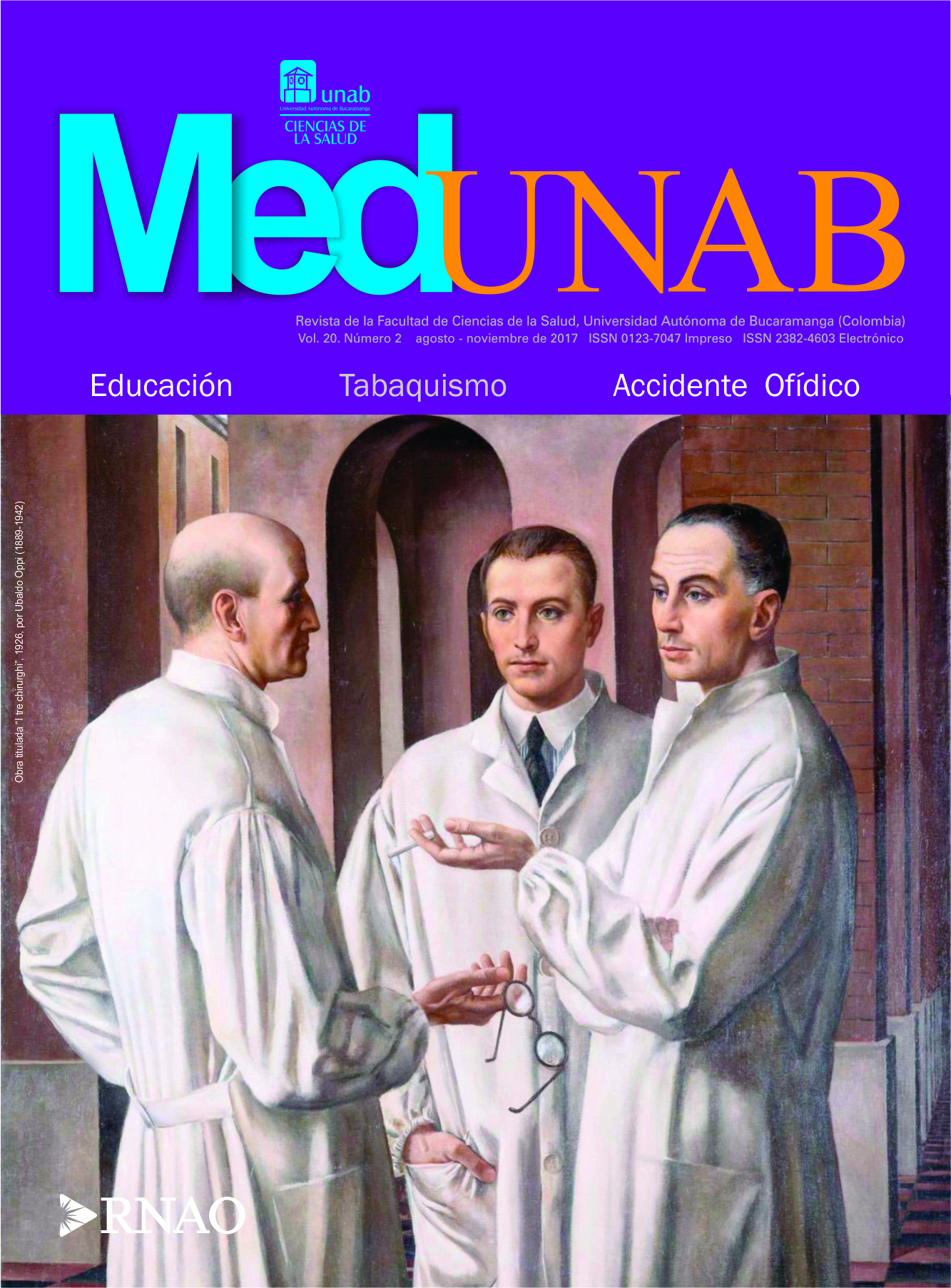
This is a descriptive and exploratory quantitative research. The sample was conformed by 14 teachers, 9 preschoolers, and 5 first graders from two educational institutions in the city of Pasto, Colombia. The instrument that was used was the Classroom Assessment Scoring System developed by Pianta, which evaluates three domains: emotional support, classroom organization and instructional support. These domains have also 9 dimensions. With this instrument, three recorded classes, per teacher, were analyzed. These recordings were filmed at the beginning, in the middle and at the end of the school year. The research team conducted the analysis of the videos simultaneously in order to establish an inter-judge agreement. The score was set from 1 to 7, being 1 the lowest and 7 the highest score. The purpose of this was to evaluate the teachers’ relationship in each dimension. Results: The teacher-student relationship proposed by Pianta was analyzed taking into account Mauchly's sphericity test criterion. It is observed that in eight of the nine dimensions there are no significant differences over time; therefore, teachers keep the same way of being in contact with children throughout the school year in the affective and learning aspects; as opposed to the dimension of language, in which it is observed that there are significant differences indeed. Conclusions: To achieve positive progress in the relationship is essential to involve the component of affection and communication in order to accomplish a mutual understanding, an interpersonal perception and empathy; this can be achieved by having in mind that the affection maintains an unbreakable relationship with the cognitive area. [Burbano-Fajardo DA, Betancourth-Zambrano SM. Affection in the Teacher-Student Relationship. MedUNAB 2017-2018; 20(3): 310-318].
References
2. Avalos B. La formación docente inicial en Chile. [Internet]. 2010. [Citado 2017 noviembre 09]. Disponible en: https://www.researchgate.net/profile/Beatrice_Avalos/publication/266338903_LA_FORMACION_DOCENTE_INICIAL_EN_CHILE/links/5548d15a0cf27c5000677f5e.pdf.
3. Ministerio de Educación Quebec – MEQ. Programme de formation de l’école québécoise, Éducation préscolaire et enseignement primaire, Version approuvée. [Internet]. 2011 [citado 2016 diciembre 30]. Disponible en: http://www.education.gouv.qc.ca/fileadmin/site_web/documents/dpse/formation_jeunes/prform2001.pdf.
4. Vygotsky L. Obras completas. Tomo 5. 1997. Madrid - España: Visor Dis.
5. Rogoff BS. Cognition as a collaborative process. Handbook of Child Psychology. [Internet]. 2011. [Citado 2017 noviembre 16]. Disponible en: http://psycnet.apa.org/record/2005-01927-013.
6. Páez D, Carbonero A. Afectividad, cognición y conducta social. Psicothema. 1993; 5(1):133-150.
7. Piaget J. Inteligencia y afectividad. [Internet]. 2011. [Citado 2017 febrero 12]; Disponible en: http://www.verticespsicologos.com/sites/default/files/Inteligencia-y-afectividad.
8. Gil N, Blanco L, Guerrero E. El dominio de afectivo en el aprendizaje de las matemáticas. Una revisión de sus descriptores básicos. Revista iberoamericana de educación matemática. 2005; 2:15-32.
9. Vygotsky L. Pensamiento y lenguaje. 1978. 2 ed. Argentina: La Pleyade. 494 p.
10. Vygotsky L. Vygotsky’s educational theory cultural context. Reino Unido. International center for the enhancement of learning potential. [Internet]. 2011. Disponible en: http://www.icelp.info/.
11. Bowlby J. Reasonable fear and natural fear. Int J Psychiatry. 1970-1971; 9:79-88.
12. Atkinson C, Regan T, Williams C. Working collaboratively with teachers to promote effective learning. Support for learning. 2006; 21(1):33-39. Disponible en: http://doi.org/10.1111/j.1467-9604.2006.00398.x
13. Baker S. Sustainable Development. 2006. 3 ed. Estados Unidos: Routledge.
14. Roorda D, Koomen H, Spilt J, Oort F. The influence of affective teacher-student relationships on school engagement and achievement: A meta-analytic approach. Review of Educational Research. 2011; 81(4):493-529. Disponible en: https://doi.org/10.3102/0034654311421793
15. Escobar F. Importancia de la educación inicial a partir de la mediación de los procesos cognitivos para el desarrollo humano integral. Revista de educación Laurus. 2006; 21(12):169-194.
16. Hamre B, Pianta R. Can Instructional and Emotional Support in the First-Grade Classroom Make a Difference for Children at Risk of School Failure?. Child Development. 2005; 76(5):949-967. Disponible en: https://doi.org/10.1111/j.1467-8624.2005.00889.x.
17. Venet M, Schmidt S. Principals Facing Inclusive Schooling or Integration. Canadian journal of education. 2012; 35(1):217-38.
18. Teven J, McCroskey J. The relationship of perceived teacher caring with student learning and teacher evaluation. Communication Education. 1997; 46(1):1-17. Disponible en: https://doi.org/10.1080/03634529709379069.
19. Venet M, Schmidt S, Paradis A, Ducreux E. La qualité de la relation entre l'enseignante et ses élèves: une simple affaire de cœur? In S. Schmidt (dir.), les conditions favorables au cheminement et à la réussite scolaires d'élèves en difficulté d'apprentissage en classe ordinaire au troisième cycle du primaire: la pratique d'enseignement de Calypso. 3 ed. Canada. PUQ; 2009.
20. Pianta R. Student-teacher, relationship Scale (STRS). Professional Manual. [Internet]. 2001. [citado 2017 noviembre 19]. Disponible en: http://schd.ws/hosted_files/ulead2016/3d/Studnet%20Teacher%20Relationship%20Scale%20(short%20form).
21. Fijalkow J, Nault T. La gestión de la clase. [Internet]. 2010. [citado 2017 enero 24]. Disponible en: https://rua.ua.es/dspace/bitstream/10045/64471/1/Psicologia-y-educacion_141.pdf.
22. Young C, Koopsen C. Health and healing. [Internet]. San Diego: 2011. [citado 2017 febrero 15]. Disponible en: https://journals.equinoxpub.com/index.php/HSCC/article/view/16929.
23. Gardner H. Multiple intelligences: New horizons. [internet] Nueva York: 2006. [citado 2017 enero 13]. Disponible en: https://howardgardner.com/m-i-new-horizons/.
24. Frymier A, Houser M. The teacher‐student relationship as an interpersonal relationship. Communication Education. 2000; 49(3):207–219. Disponible en: https://doi.org/10.1080/03634520009379209
25. DeVries R. Coercion in constructivist education. Paper presented at the annual meeting of the American Educational Research Association. [Internet]. 2001. [citado 2017 enero 16]. Disponible en: https://pdfs.semanticscholar.org/3194/a7b93239bd63305323b0576fee58f350d0aa.pdf.
26. Anh J. A good teacher in every classroom: Preparing the highly qualified teachers our children deserve. 2005. 2 ed. San Francisco: DarlingHammond.
27. Brousseau G. Théorie des Situations Didactiques. Grenoble. Psychologie et problèmes de la société. [Internet]. 2013. [citado 2017 enero 13]. Disponible en: http://math.univ-lyon1.fr/capes/IMG/pdf/UE10-CoursSSLno1.pdf
28. Fernandez, P, Extremera N. La Inteligencia Emocional y la educación de las emociones desde el Modelo de Mayer y Salovey. Revista Interuniversitaria de Formación del Profesorado. 2005; 19(3):63-93.
29. Schubauer M. El desarrollo cognitivo de los niños en la escuela primaria: la psicología del aprendizaje en las diferentes situaciones pedagógicas. Revista de educación. 1986; 279:103-120.
31. Vygotsky L. Obras escogidas II. 1993. Madrid - España. Visor.
32. Pianta R, La Paro K, Hamre B. Classroom assessment scoring system (CLASS). [Internet]. 2008. [citado 2017 enero 07]. Disponible en: http://curry.virginia.edu/research/centers/castl/class.
33. Monje C. Metodología de investigación cuantitativa y cualitativa. Guía práctica. [Internet]. 2011. [citado 2017 febrero 13]. Disponible en: https://carmonje.wikispaces.com/file/view/Monje+Carlos+Arturo+-+Gu%C3%ADa+did%C3%A1ctica+Metodolog%C3%ADa+de+la+investigaci%C3%B3n.
34. Betancourth S, Burbano D, Venet M. La relación docente-estudiantes de preescolar según el CLASS de Pianta. Psicogente. 2017; 20(37):55-69.
35. UNESCO. Protagonismo docente en el cambio educativo: PRELAC. 2005: p. 193. Costa Rica.
36. Sebastiani I. El comportamiento del niño en la escuela. Revista de educación, cultura y sociedad. [Internet]. 2013. [citado 2017 enero 13]. Disponible en: https://issuu.com/gorettijimenez/docs/reporte_de_investigaci__n.
37. Hernández M. Metodologías de enseñanza y aprendizaje en altas capacidades. 2010. 3 ed. Santa Cruz de Tenerife.
38. Pérez A. Aprender a educar. Nuevos desafíos para la formación de docentes. Revista Interuniversitaria de Formación del Profesorado. 2010; 68(24,2):37-60.
39. Barrera M. El docente como gestor del clima en el aula. (Tesis de maestría). Cantabria, España. 2012.
40. Gómez C, Sanz A, Puyal E, Luna M, Sanagustín M, Elboj C. Convivencia en los centros educativos. 2011. Convivencia docente y alumnos. Zaragoza. GORFISA.
41. Treviño E, Varela C, Romo F, Núñez V. Presencia de lenguaje académico en las educadoras de párvulos y su relación con el desarrollo del lenguaje de los niños. Calidad de la educación. 2015; 43:137-168. Disponible en: http://dx.doi.org/10.4067/S0718-45652015000200005.
Downloads
| Article metrics | |
|---|---|
| Abstract views | |
| Galley vies | |
| PDF Views | |
| HTML views | |
| Other views | |